Why prescribed drugs fail urine drug screens
Immunoassays detect a molecular shape, not a named drug. Which prescribed drugs cross-react, why, and the benzodiazepine trap that runs the other way.
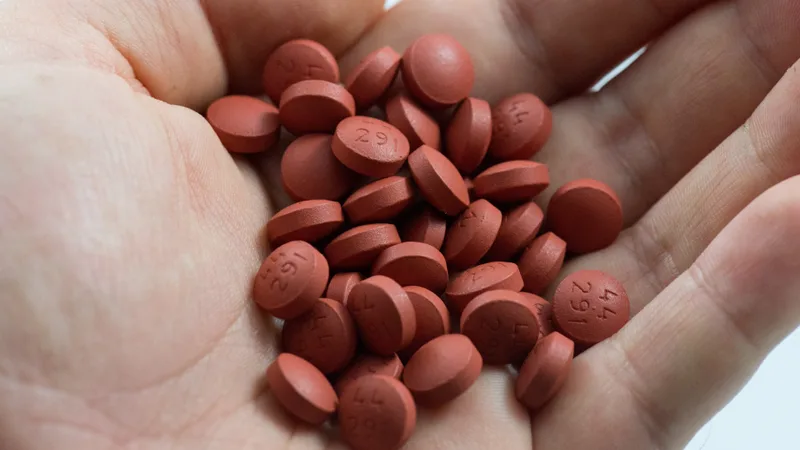
 Photo: Bill Branson / Public domain, via Wikimedia Commons
Short answer: aminoglycosides require plasma concentration monitoring because efficacy tracks the peak and toxicity tracks the trough. Ototoxicity is usually permanent; nephrotoxicity usually reverses on withdrawal.
Aminoglycosides (gentamicin, tobramycin, amikacin) bind the 30S ribosomal subunit, causing mistranslation and bacterial death. Killing increases with peak concentration relative to the minimum inhibitory concentration. A post-antibiotic effect suppresses regrowth for hours after levels fall below the minimum inhibitory concentration. These two properties justify high-peak, long-interval dosing: maximum killing from the peak, continued suppression during the trough. The StatPearls review of aminoglycoside pharmacology details the pharmacodynamic rationale.
Traditional dosing divides the daily dose into two or three infusions. A peak level drawn 30 minutes after infusion end targets 5 to 10 mg/L for gentamicin and tobramycin in serious Gram-negative infection. A trough drawn before the next dose must fall below 2 mg/L, confirming washout. Elevated troughs indicate accumulation and precede nephrotoxicity and ototoxicity. Dose or interval adjustment follows per local protocol.
Peak drives efficacy. Trough drives toxicity. Ototoxicity is permanent; nephrotoxicity reverses.
Extended-interval dosing gives the full daily dose once. A single level drawn 6 to 14 hours after infusion start is plotted on the Hartford nomogram, which assigns the dosing interval (24, 36 or 48 hours) from the position on the curve. Peak-trough pairs are not used because the peak is intentionally supratherapeutic by multiple-daily standards and the trough intentionally undetectable. Once-daily dosing is avoided in pregnancy, burns, endocarditis and severe renal impairment, where multiple-daily monitoring applies.
Monitoring parameters like these are drilled daily inside the PharmBit app, one mechanism, one trap, five minutes.
Aminoglycosides accumulate in inner-ear endolymph and damage cochlear outer hair cells, producing high-frequency hearing loss that progresses to speech frequencies, plus tinnitus. Vestibular hair cells are also affected, producing vertigo and ataxia. Cochlear damage is usually irreversible because human hair cells do not regenerate. Loop diuretics add ototoxicity through independent strial injury, and the combination is a classic exam precipitant. Baseline and serial audiometry detect early loss.
Individual aminoglycosides differ in cochlear-vestibular selectivity. Amikacin and kanamycin injure cochlear hair cells preferentially, presenting with hearing loss and tinnitus. Gentamicin and tobramycin injure vestibular hair cells preferentially, presenting with vertigo, nystagmus and ataxia that patients describe as imbalance rather than hearing change. Streptomycin is predominantly vestibulotoxic. Exam stems match the presenting symptom to the agent: hearing loss implicates amikacin-pattern injury, imbalance implicates gentamicin-pattern injury.
Once-daily dosing is avoided where pharmacokinetics are unpredictable or stakes are highest. Pregnancy alters volume of distribution and clearance. Burns increase clearance dramatically. Endocarditis requires sustained bactericidal concentrations that drug-free intervals may compromise. Creatinine clearance below approximately 60 mL/min impairs the washout phase that makes extended intervals safe. In each setting, multiple-daily dosing with peak-trough monitoring applies instead.
Aminoglycosides accumulate in proximal tubular cells through megalin-mediated uptake, producing acute tubular injury with rising creatinine, magnesium wasting and a non-oliguric pattern. Unlike ototoxicity, tubular epithelium regenerates after withdrawal, so renal function usually recovers. Risk rises with duration beyond 5 days, trough accumulation, dehydration, older age and concurrent nephrotoxins (vancomycin, amphotericin B, ciclosporin). For the narrow-index monitoring pattern that follows the same peak-trough logic, see warfarin counselling points.
Monitoring includes plasma levels per regimen, serum creatinine with estimated glomerular filtration rate, magnesium, and audiometry for prolonged courses, consistent with the StatPearls review of aminoglycoside toxicity. Hydration is maintained unless contraindicated. Duration is minimised: de-escalation to narrower agents once cultures return is standard stewardship and an examinable decision point.
A high peak indicates toxicity. It does not under once-daily dosing, where the peak is intentionally high. Toxicity tracks the trough and the duration of exposure, not the peak height. Applying multiple-daily targets to once-daily levels is the exam error being tested.
Elevated trough on multiple-daily dosing indicates extended interval or dose reduction per protocol. New hearing loss on gentamicin plus furosemide indicates additive ototoxicity. Rising creatinine after a week indicates tubular injury that usually reverses on withdrawal.
The distinction between the two main toxicities matters more than the fact that both exist. Renal tubular cells regenerate, so nephrotoxicity is typically reversible once the drug is stopped and function recovers over weeks. Cochlear and vestibular hair cells do not regenerate in humans, so damage to them is permanent. Nephrotoxicity is usually recoverable and ototoxicity usually is not, which is why the reversible toxicity is the one routinely monitored by blood test while the irreversible one is prevented by dosing strategy. The practical consequence is that creatinine is checked to catch renal injury early, whereas hearing loss is not caught early at all, because the high frequencies affected first sit above the range of conversational speech and the patient notices nothing until damage is established. Tinnitus and vertigo are therefore warning symptoms worth asking about directly rather than waiting to be told.
Aminoglycoside toxicity rarely occurs in isolation from other contributors, and recognising them is part of the same reasoning. Loop diuretics are independently ototoxic and also reduce circulating volume, which concentrates the aminoglycoside and reduces renal perfusion at the same time. Vancomycin, amphotericin B, ciclosporin and contrast media add nephrotoxic load. NSAIDs reduce the prostaglandin-mediated afferent dilation that protects glomerular filtration, which is the same mechanism described in when to avoid NSAIDs. The combinations that cause harm are additive rather than individually dramatic, so the whole chart matters more than any one prescription on it. Advanced age, pre-existing renal impairment, prolonged courses and cumulative lifetime exposure all raise baseline risk before any interacting drug is added.
Aminoglycosides are the exception among protein synthesis inhibitors, and the reason explains their whole monitoring strategy. They bind irreversibly to the 30S ribosomal subunit and cause misreading of messenger RNA, so the bacterium produces aberrant proteins rather than simply pausing synthesis. Those misfolded proteins are inserted into the cell membrane, where they disrupt its integrity and allow further drug entry, which accelerates the process. The killing comes from membrane damage downstream of the ribosome, which is why aminoglycosides are bactericidal while other protein synthesis inhibitors are not [3]. Entry into the bacterial cell requires an oxygen-dependent transport step, and that single requirement explains their inactivity against anaerobes and their reduced effect in abscesses.
The two levels answer separate questions, and conflating them is the commonest error on this topic. The peak reflects whether the concentration reached is high enough relative to the organism's minimum inhibitory concentration to produce efficient concentration-dependent killing, so it is an efficacy measurement [4]. The trough reflects whether the concentration has fallen low enough for long enough to let tissue accumulation reverse, so it is a safety measurement. The peak asks whether the drug is working and the trough asks whether it is harming, which is why a regimen can need adjusting in opposite directions depending on which is wrong. A high trough is corrected by lengthening the interval rather than reducing the dose, because reducing the dose would also lower the peak and undermine the killing the peak is there to ensure.
Ototoxicity and nephrotoxicity arise from uptake into specific cells by a transport process that becomes saturated, and this is the key to why dosing is structured as it is. Aminoglycosides are taken up into renal proximal tubular cells and into cochlear and vestibular hair cells by a carrier-mediated mechanism that saturates at relatively low concentrations. Once saturated, higher plasma concentrations do not accelerate uptake further, but sustained exposure keeps the transporter working. Tissue accumulation depends on how long the concentration stays high rather than how high it briefly gets, which is the entire rationale for extended-interval dosing. Giving a large dose once daily achieves a high peak for killing while allowing a prolonged low-concentration window in which uptake stops and accumulated drug can wash out.
Aminoglycosides kill in a concentration-dependent manner and cause toxicity in a time-dependent manner, and that mismatch shapes everything about how they are given and monitored. Killing depends on achieving a high peak relative to the organism's minimum inhibitory concentration, while ototoxicity and nephrotoxicity depend on saturable uptake into hair cells and proximal tubular cells that continues for as long as concentrations remain elevated. Extended-interval dosing exploits that difference by delivering a high peak followed by a low trough, which preserves efficacy while limiting accumulation. Peaks are therefore interpreted as efficacy and troughs as safety, and a raised trough is managed by lengthening the interval rather than lowering the dose.
Aminoglycoside intervals are set from renal function, so the arithmetic behind that decision is worth being fluent in: our free creatinine clearance calculator gives the formula, a worked example and the mistake that costs most marks.
1. Gentamicin multiple-daily dosing: peak 9 mg/L, trough 3.1 mg/L. What does the trough indicate?
2. A patient on gentamicin plus furosemide develops tinnitus and high-frequency hearing loss. What is the mechanism?
3. Creatinine rises on day 8 of gentamicin but hearing is normal. What is the expected course after withdrawal?
Multiple-daily dosing: peak 5 to 10 mg/L, trough below 2 mg/L. Once-daily dosing uses a single timed level plotted on the Hartford nomogram rather than peak-trough pairs.
Aminoglycosides kill in a concentration-dependent manner with a post-antibiotic effect. A high peak maximises killing; the long drug-free interval allows renal and cochlear washout, reducing toxicity.
Cochlear damage is usually irreversible. Vestibular damage may partially recover. Baseline and serial audiometry detect early high-frequency loss before speech frequencies are affected.
Loop diuretics add ototoxicity. Vancomycin, amphotericin B and ciclosporin add nephrotoxicity. The exam stacks these deliberately.
Proximal tubular cells regenerate after drug withdrawal. Cochlear hair cells do not regenerate in humans. The same drug produces one reversible and one permanent toxicity by different tissue biology.
For study only. This post explains pharmacology concepts for exam preparation. It is not medical advice. Always follow your course materials, formulary, and supervisor guidance for clinical decisions.
The safety facts exams love, one at a time, before you need them.
Free to download. 7-day Pro trial. No credit card.
Immunoassays detect a molecular shape, not a named drug. Which prescribed drugs cross-react, why, and the benzodiazepine trap that runs the other way.
Intestinal CYP3A4 inhibition explained, which statins are affected, and the exam trap. Safety-first pharmacology in six minutes.
INR target range, vitamin K consistency, key interactions and bleeding signs. Safety-first pharmacology in six minutes.
Renal, gastric and bronchial risks explained by mechanism. The avoid list for pharmacy exams in six minutes.