
Statin muscle pain: mechanism, CYP interactions and counselling points 2026
Myopathy mechanism, CYP interactions that raise risk, and counselling points. Safety-first pharmacology in six minutes.
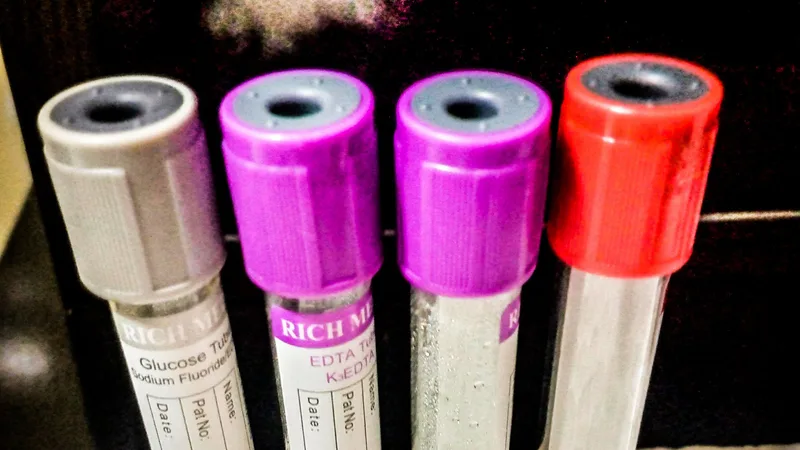 Photo: Medical laboratory, Abuja / CC0, via Wikimedia Commons
Short answer: warfarin requires INR monitoring against an indication-specific target, consistent dietary vitamin K intake, and vigilance for interacting drugs and bleeding signs.
The international normalised ratio standardises prothrombin time across laboratories, which makes one number comparable between hospitals and exam stems. The target range is 2.0 to 3.0 for most indications, including atrial fibrillation and venous thromboembolism, because that band balances clot prevention against bleeding risk. Mechanical mitral valve replacement requires a higher range because prosthetic surfaces are more thrombogenic than native arrhythmia. The indication therefore determines the target, so exam stems state it first and every interpretation that follows depends on it.
Warfarin inhibits vitamin K epoxide reductase, reducing gamma-carboxylation of clotting factors II, VII, IX and X, which leaves them unable to bind calcium and join the clotting cascade. Dietary vitamin K opposes this effect by resupplying the reduced vitamin K the cycle needs. Consistent daily intake therefore keeps INR stable. Sudden increases lower INR and raise clotting risk; sudden decreases raise INR and raise bleeding risk. The counselling point is consistency, not avoidance, as the StatPearls review of warfarin pharmacology describes.
INR 2.0 to 3.0 for most indications. Consistent vitamin K intake. Report any unusual bleeding promptly.
Drugs that raise INR and bleeding risk include antiplatelets, NSAIDs, azole antifungals, metronidazole, trimethoprim-sulfamethoxazole and amiodarone, each through reduced metabolism or additive bleeding effects. Enzyme inducers such as rifampicin, carbamazepine and St John's wort lower INR by accelerating warfarin clearance. Alcohol excess raises INR through reduced metabolism; abrupt cessation lowers it as enzyme activity rebounds. Every new prescription in a warfarin patient therefore triggers an INR check, which is the habit exam stems reward.
Warfarin offset takes days because existing carboxylated factors must clear, so surgery requires advance planning rather than day-before stopping. High clotting-risk patients receive heparin bridging across the subtherapeutic window; low-risk patients simply pause and restart. Restart timing balances bleeding against clotting, usually the evening of or day after minor procedures per local protocol. Exam stems that mention bridging test whether the indication justifies it, not the mechanics.
Interaction pairs like these are drilled daily inside the PharmBit app, one mechanism, one trap, five minutes.
Warfarin has a narrow therapeutic index: small changes in dose, diet or interacting drugs produce large INR shifts. The StatPearls review of heparin-induced thrombocytopenia covers when heparin bridging stops and alternatives start. For the NSAID interaction that raises bleeding risk on warfarin, see NSAIDs to avoid.
Patients on warfarin must avoid all green vegetables. They must not. Leafy greens contain vitamin K, but the requirement is a consistent intake, not elimination. Crash dieting and binge changes destabilise INR.
Reversal follows from the same mechanism, which is why the options are not interchangeable. Vitamin K restores the substrate the blocked enzyme was recycling, so the liver can resume carboxylating new factors, but that requires synthesis and takes hours before the INR moves meaningfully. Prothrombin complex concentrate supplies the deficient factors directly, so it acts within minutes because nothing has to be manufactured. Fresh frozen plasma does the same in principle but is far more dilute, so a large volume is needed. Vitamin K restarts production while factor concentrate replaces the product, which is why urgency decides the choice rather than the INR value alone. A patient with a high INR and no bleeding is a different problem from one with intracranial haemorrhage, even at the same number, and exam stems separate the two deliberately. Vitamin K alone is generally sufficient when there is time; major bleeding requires replacement because waiting for synthesis is not an option.
Warfarin does not thin blood, and the phrase obscures what it does. It inhibits vitamin K epoxide reductase, the enzyme that regenerates reduced vitamin K after it has been used. Reduced vitamin K is the cofactor required to carboxylate glutamate residues on clotting factors II, VII, IX and X, and that carboxylation is what lets those factors bind calcium and assemble on phospholipid membranes. Without it the factors are still synthesised and still circulate, but they cannot participate in coagulation. Warfarin produces functionally inert clotting factors rather than fewer of them, which is why its effect depends entirely on how quickly the already-carboxylated factors are cleared. That single fact explains the onset delay, the monitoring, and the reversal strategy together.
Existing functional factors must be cleared before the anticoagulant effect appears, so onset is governed by their half lives rather than by warfarin's own. Factor VII has the shortest half life at around six hours, so it disappears first, and because the prothrombin time is most sensitive to factor VII the INR rises early. Factor II has a half life measured in days, and it is factor II depletion that provides most of the genuine antithrombotic effect. The INR rises before the patient is actually anticoagulated, because the test is most sensitive to the factor that vanishes first and least sensitive to the one that matters most. That mismatch is why cover with a parenteral anticoagulant is used when immediate anticoagulation is required. It also explains why checking an INR too early gives a misleading picture of how anticoagulated a patient actually is.
Vitamin K dependent carboxylation is not limited to procoagulant factors, which produces a counterintuitive early risk. Proteins C and S are natural anticoagulants and are also vitamin K dependent, and protein C has a short half life comparable to factor VII. Starting warfarin therefore removes a natural anticoagulant before it removes the slow procoagulant factors. For the first day or two warfarin can be net procoagulant, which is the mechanism behind warfarin-induced skin necrosis and another reason initial parenteral cover is used. Exam stems describing skin lesions appearing days after warfarin initiation are testing this sequence rather than an allergic reaction. The risk is concentrated in patients who already have reduced protein C activity, because they begin from a lower reserve and lose it faster. It is also the reason warfarin is not started alone at high loading doses, since a large initial dose accelerates the fall in protein C without accelerating the fall in factor II. Starting steadily and overlapping with a parenteral agent addresses both problems at once.
Warfarin is vulnerable at an unusual number of points, which is why its interaction list looks endless. It is metabolised largely by CYP2C9, so inhibitors such as fluconazole, metronidazole and amiodarone raise concentrations while inducers such as rifampicin and carbamazepine lower them [3]. Dietary vitamin K intake competes directly with the mechanism. Antibiotics can reduce vitamin K producing gut flora, adding a second route. Drugs that do not change warfarin concentration at all, such as NSAIDs and antiplatelets, still increase bleeding by impairing platelet function. Warfarin interactions arrive through metabolism, diet, gut flora and platelet function, so a normal INR does not exclude an interaction that raises bleeding risk. Genetic variation adds a further layer, since CYP2C9 variants reduce metabolism and VKORC1 variants alter sensitivity of the target enzyme itself. Together these explain a substantial part of why maintenance dose requirements differ several-fold between patients who look otherwise similar, and why starting doses are conservative until response is known. The general enzyme rules are set out in CYP450 inducers and inhibitors.
The commonest counselling error is telling patients to avoid green vegetables, which is both unnecessary and counterproductive. Because warfarin dose is titrated against the INR achieved on a patient's habitual diet, the dose already accounts for whatever vitamin K they normally consume. Sudden avoidance removes that intake and raises the INR, while a sudden large increase lowers it. Stability of intake matters, not the amount, because the dose is calibrated to the patient's usual pattern rather than to an ideal one. That is why counselling targets consistency and why a change in diet is worth reporting even when the foods involved are healthy ones. The same reasoning applies to alcohol, where the pattern matters more than the presence. Regular moderate intake tends to induce metabolism over time, whereas a single heavy episode acutely inhibits it and raises the INR, so the two produce opposite effects from the same substance. Binge drinking is therefore the specific risk worth naming rather than alcohol in general, which is a distinction patients rarely hear and stems often test.
High INR with bleeding indicates vitamin K or 4-factor prothrombin complex concentrate depending on severity. Low INR with clotting indicates dose review and adherence check. New interacting drug plus INR shift identifies the precipitant.
Warfarin counselling rests on three pillars: indication-specific INR targets, consistent vitamin K intake, and interaction vigilance. Narrow therapeutic index means small changes produce large INR shifts, so every new drug, diet change or illness triggers reassessment. Bleeding signs prompt immediate review; bridging decisions follow clotting risk.
Warfarin feels slow because clotting factors have to be cleared before the effect appears, which is a half-life question: our free half-life and steady state calculator gives the formula, a worked example and the mistake that costs most marks.
1. A warfarin patient with atrial fibrillation has an INR of 2.5. How is this interpreted?
2. The same patient starts metronidazole. What happens to INR?
Usually 2.0 to 3.0 for most indications such as atrial fibrillation and venous thromboembolism. Mechanical mitral valves require a higher range. The exam stem always states the indication first.
Warfarin inhibits vitamin K epoxide reductase, reducing functional clotting factors II, VII, IX and X. Sudden increases in dietary vitamin K oppose the effect and lower INR; sudden decreases raise INR.
Antiplatelets, NSAIDs, azole antifungals, metronidazole, trimethoprim-sulfamethoxazole and amiodarone. Enzyme inducers such as rifampicin and carbamazepine lower INR.
Unusual bruising, nosebleeds, bleeding gums, blood in urine or stool, coughing blood, and severe headache. Any of these requires prompt assessment.
For study only. This post explains pharmacology concepts for exam preparation. It is not medical advice. Always follow your course materials, formulary, and supervisor guidance for clinical decisions.
The safety facts exams love, one at a time, before you need them.
Free to download. 7-day Pro trial. No credit card.
Myopathy mechanism, CYP interactions that raise risk, and counselling points. Safety-first pharmacology in six minutes.
Narrow therapeutic index, sodium-dehydration handling, NSAID interaction and toxicity signs.
Immunoassays detect a molecular shape, not a named drug. Which prescribed drugs cross-react, why, and the benzodiazepine trap that runs the other way.
Intestinal CYP3A4 inhibition explained, which statins are affected, and the exam trap. Safety-first pharmacology in six minutes.