
What does -prazole mean?
The -prazole stem marks a proton pump inhibitor. Why irreversible binding makes the effect outlast the drug, why dosing is before food, and the CYP2C19 trap.
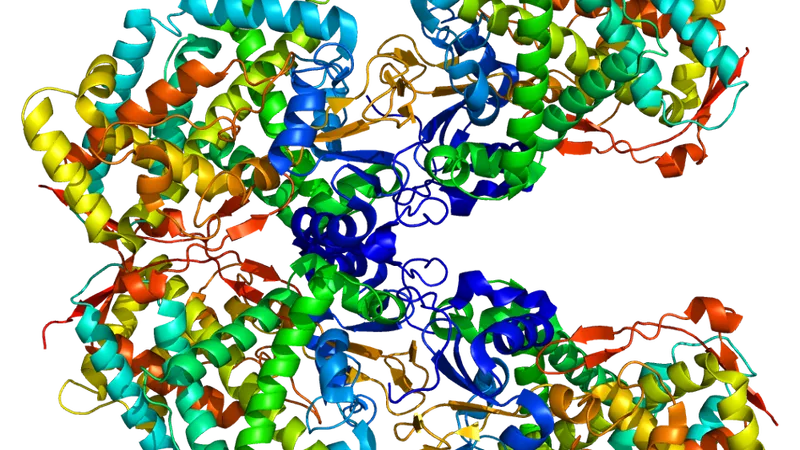 Image: Emw / CC BY-SA 3.0, via Wikimedia Commons
Short answer: a CYP450 inhibitor reduces metabolism so the substrate accumulates, and an inducer increases enzyme production so the substrate is cleared faster. The mnemonic stops there, which is why it fails. Inhibition is immediate and induction takes days, and for prodrugs the whole direction reverses.
Every CYP450 mnemonic encodes membership and nothing else. It tells you rifampicin is an inducer and clarithromycin is an inhibitor, which is two facts stored with no structure holding them. The mnemonic cannot tell you how fast the interaction appears, what happens when the drug is stopped, or why codeine behaves backwards. A list of names answers which drug, but exam questions and real prescribing turn on when, how much and in which direction. Those three come from the mechanism, so the mechanism is what is worth learning.
Cytochrome P450 enzymes are a family of haem-containing oxidases concentrated in the liver and the intestinal wall. They catalyse oxidative reactions that make lipophilic drugs more water soluble, so the molecule can be excreted. CYP3A4 handles the largest share of drug metabolism, which is why it generates the most interactions. Inhibition and induction of these enzymes are central mechanisms producing clinically significant drug-drug interactions [1]. The enzyme is the bottleneck in clearance, so anything that changes its activity changes the concentration of every substrate passing through it.
An inhibitor works on enzyme that already exists, so the effect starts as soon as the inhibitor reaches the liver. Most inhibitors compete with the substrate for the active site, and competition begins on first exposure. Substrate concentration therefore starts rising within hours, and reaches a new steady state over the substrate's own half-lives. Inhibition is fast because nothing has to be built; the drug simply occupies machinery that is already present. This is why an interaction such as grapefruit with a statin can appear after a single glass, as covered in why grapefruit blocks statins.
Induction cannot be fast because it requires manufacturing. The inducer binds a nuclear receptor such as PXR, CAR or AhR, that receptor increases transcription of the CYP gene, and the cell then translates new enzyme protein. Each step takes time, so enzyme levels climb over days and reach a new plateau in one to three weeks depending on the enzyme and the inducer. Induction has a lag because the body has to build more enzyme, while inhibition only has to block what is already there.
Inhibition blocks existing enzyme, so it is immediate. Induction builds new enzyme, so it is delayed. That single asymmetry answers most timing questions.
The asymmetry decides what a patient experiences and when. Adding an inhibitor to a narrow therapeutic index drug can produce toxicity within days, so the risk is front-loaded. Adding an inducer produces gradual loss of effect, which is easy to misread as disease progression or poor adherence because nothing changes on the day the drug is started. Inhibition looks like a sudden adverse event and induction looks like the treatment quietly stopped working. Recognising that pattern is more useful than any list.
Not all inhibition reverses at the same speed. Competitive inhibitors simply occupy the active site, so activity returns as the inhibitor is cleared. Mechanism-based inhibitors are metabolised into a reactive species that inactivates the enzyme permanently, so recovery requires synthesis of new enzyme. Clarithromycin and ritonavir act this way at CYP3A4. A mechanism-based inhibitor keeps inhibiting after it has been cleared, because the enzyme itself was destroyed rather than blocked. This is why some interactions outlast the offending drug by days.
Strength is defined by measurement rather than impression. The FDA classifies a strong inhibitor as one that increases the area under the curve of a sensitive index substrate by five-fold or more, and a moderate inhibitor as one producing an increase of at least two-fold but less than five-fold [2]. A strong inhibitor multiplies exposure at least five times, which is the number that turns an interaction from theoretical into dangerous. The FDA maintains a public table of substrates, inhibitors and inducers built on these definitions [2], and expects in vitro data on the major P450s before an investigational drug proceeds [3].
The most important exception inverts the whole rule. Codeine is inactive as given and requires CYP2D6 to convert it into morphine, so inhibiting CYP2D6 blocks activation rather than clearance. The result is less analgesia, not more, which is the opposite of what the mnemonic predicts. Clopidogrel behaves the same way through CYP2C19. For a prodrug, an inhibitor causes treatment failure and an inducer can cause toxicity, because the enzyme makes the active drug instead of removing it. The codeine case is worked through in morphine vs codeine.
| Enzyme | Inhibitors | Inducers | Notable substrates |
|---|---|---|---|
| CYP3A4 | Clarithromycin, ketoconazole, itraconazole, ritonavir, grapefruit juice | Rifampicin, carbamazepine, phenytoin, St John’s wort | Statins, calcium channel blockers, many others |
| CYP2D6 | Fluoxetine, paroxetine, bupropion, quinidine | Not meaningfully inducible | Codeine, tramadol, metoprolol, many antidepressants |
| CYP2C9 | Fluconazole, amiodarone, metronidazole | Rifampicin, carbamazepine | Warfarin, phenytoin, NSAIDs |
| CYP1A2 | Ciprofloxacin, fluvoxamine, cimetidine | Tobacco smoke, carbamazepine | Theophylline, clozapine, caffeine |
| CYP2C19 | Omeprazole, fluvoxamine | Rifampicin | Clopidogrel (prodrug), diazepam |
Interaction mechanisms, one drug at a time, on the PharmBit app. Five minutes a day.
Grapefruit acts in the gut wall rather than the liver, which changes which drugs it affects. Intestinal CYP3A4 normally metabolises a portion of an oral dose before it reaches the circulation, reducing bioavailability. Grapefruit inhibits that intestinal enzyme irreversibly, so more of the dose survives absorption. Grapefruit raises how much drug gets in rather than slowing how fast it leaves, so it affects oral drugs with high first-pass metabolism and does nothing to intravenous ones. That site distinction is the exam point.
Withdrawal is the half of the topic most resources omit. Stopping an inhibitor allows metabolism to recover, so a dose titrated upward during inhibition can become subtherapeutic. Stopping an inducer lets enzyme levels fall over days, so a dose that was raised to overcome induction can drift into toxicity. Every interaction runs in both directions, and the dangerous moment is often when the interacting drug is removed. Recognising the class from the name speeds this up, which is what drug name stems are for.
Stems usually hide the enzyme and give you timing instead. A patient stable on warfarin whose INR climbs days after starting an antifungal is an inhibition stem. A transplant patient whose immunosuppressant level falls two weeks after starting an antiepileptic is an induction stem. A patient with poor analgesia on codeine while taking fluoxetine is the prodrug reversal. The timing in the stem tells you inhibition or induction before you have identified the enzyme. Those patterns recur across NAPLEX, PEBC, GPhC CRA, OPRA and PCN papers.
CYP450 inhibitors block enzyme that already exists, so substrate concentrations rise within hours. Inducers act through nuclear receptors to increase transcription and new enzyme synthesis, so their effect builds over days to weeks and fades just as slowly. Mechanism-based inhibitors destroy the enzyme rather than occupying it, which is why some interactions outlast the drug. For prodrugs such as codeine and clopidogrel the direction reverses entirely, because the enzyme creates the active molecule rather than removing it.
1. A patient taking codeine for pain is started on fluoxetine and reports the codeine has stopped working. What explains this?
2. A transplant patient starts carbamazepine. Their immunosuppressant level is unchanged at 48 hours but has fallen markedly at two weeks. Why the delay?
3. By FDA definition, a strong CYP inhibitor increases the AUC of a sensitive index substrate by how much?
An inhibitor reduces enzyme activity, so a substrate metabolised by that enzyme accumulates. An inducer increases the amount of enzyme produced, so the substrate is cleared faster and its concentration falls. The two also differ sharply in how quickly they act.
Inhibition is usually direct binding to existing enzyme, so it starts as soon as the inhibitor reaches the liver. Induction requires a ligand to activate a nuclear receptor, increase gene transcription and produce new enzyme protein, which takes days to weeks to reach a new steady state.
The FDA defines a strong inhibitor as one that increases the area under the curve of a sensitive index substrate by five-fold or more. A moderate inhibitor produces an increase of at least two-fold but less than five-fold.
Codeine is a prodrug that requires CYP2D6 to be converted to morphine. Inhibiting the enzyme blocks activation rather than blocking clearance, so less active drug is formed and analgesia fails. Prodrugs reverse the usual direction of the interaction.
Yes, and it is frequently missed. When an inhibitor is withdrawn, metabolism recovers and a previously stable dose may become subtherapeutic. When an inducer is withdrawn, enzyme levels fall over days and the substrate can accumulate toward toxicity.
For study only. This post explains pharmacology concepts for exam preparation. It is not medical advice. Always follow your course materials, formulary, and supervisor guidance for clinical decisions.
Understanding why beats memorizing what. One mechanism explained properly, every day.
Free to download. 7-day Pro trial. No credit card.
The -prazole stem marks a proton pump inhibitor. Why irreversible binding makes the effect outlast the drug, why dosing is before food, and the CYP2C19 trap.
The -floxacin stem marks a fluoroquinolone inhibiting DNA gyrase. Why tendon rupture, QT prolongation and the chelation interaction all follow from the class.
The -azepam and -azolam stems mark benzodiazepines. Why frequency rather than duration of channel opening makes them safer than barbiturates, and which are safe in liver disease.
The -dipine stem marks a dihydropyridine calcium channel blocker acting on vessels rather than the heart. Why that causes ankle oedema and reflex tachycardia.