
Beta-blockers mask hypoglycaemia symptoms: mechanism explained
Attenuated adrenergic warning signs explained, what remains visible, and the exam trap. Mechanism-first in six minutes.
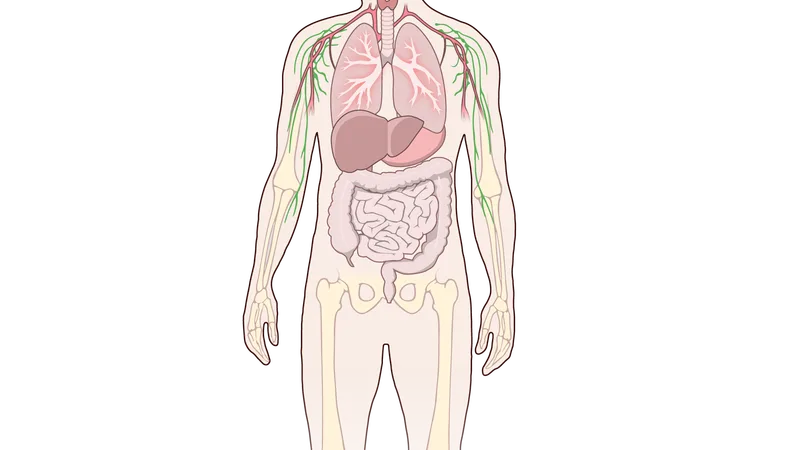 Photo: NIH BioArt / Public domain, via Wikimedia Commons
Short answer: opioids activate mu receptors in the enteric nervous system, slowing peristalsis and increasing fluid absorption. Tolerance does not develop to this effect. Peripherally acting antagonists reverse it without reducing analgesia.
The enteric nervous system expresses mu-opioid receptors throughout the myenteric and submucosal plexuses. Activation inhibits acetylcholine release, reducing propulsive peristalsis while increasing segmental (non-propulsive) contractions and sphincter tone. Simultaneously, reduced intestinal secretion and increased fluid absorption harden stool. Gastric emptying slows. The net result is prolonged transit with desiccated stool, as detailed in the StatPearls review of opioid-induced constipation.
Central opioid effects (analgesia aside, sedation and nausea) diminish with continued exposure through receptor desensitisation and downstream adaptation. Enteric mu receptors exhibit minimal desensitisation: beta-arrestin recruitment and receptor internalisation proceed differently in enteric neurons. Constipation therefore persists at full intensity for the duration of opioid therapy, unlike nausea which typically resolves within days. Exam stems exploit this divergence by asking which adverse effect requires prophylaxis from day one.
Nausea fades; constipation stays. Prophylactic laxatives start with the opioid, not after symptoms appear.
Guidelines position prophylactic stimulant laxatives (senna, bisacodyl) with or without stool softeners (docusate) at opioid initiation. Osmotic agents (lactulose, macrogol) provide alternatives when stimulants are insufficient. Bulk laxatives are ineffective without adequate fluid and mobility, and fibre alone cannot overcome mu-mediated dysmotility. The StatPearls review of laxative pharmacology compares the classes by mechanism.
Adverse-effect mechanisms like this are drilled daily inside the PharmBit app, one mechanism, one trap, five minutes.
Peripherally acting mu-opioid receptor antagonists (methylnaltrexone, naloxegol, naldemedine) antagonise gut mu receptors while excluded from the central nervous system by P-glycoprotein efflux (naloxegol), quaternary ammonium charge (methylnaltrexone) or transporter restriction (naldemedine). Bowel function restores without analgesia reversal. They are reserved for laxative-refractory opioid-induced constipation per local protocol. Naloxone is not a substitute: it crosses the blood-brain barrier and precipitates pain and withdrawal.
Methylnaltrexone is available in subcutaneous and oral formulations, with the injectable form acting within hours for rescue use in advanced illness. Naloxegol is an oral PEGylated naloxone derivative dosed once daily for chronic non-cancer pain populations. Naldemedine is an oral once-daily agent in the same setting. All three share the peripheral restriction principle and differ in formulation, onset and licensed population. Exam stems match the rescue setting to subcutaneous methylnaltrexone and the chronic setting to oral agents.
Opioid effects span the full gastrointestinal tract. Delayed gastric emptying produces early satiety, nausea and vomiting distinct from chemoreceptor trigger zone nausea. Reduced intestinal secretion and increased absorption desiccate stool. Increased anal sphincter tone and impaired defecation reflex add outlet dysfunction. Laxative classes map to segments: prokinetics and stimulants address transit, osmotics address stool water, PAMORAs address the receptor root across all segments simultaneously.
Constipation affects the majority of chronic opioid patients and is a leading cause of non-adherence and discontinuation. Bowel regimens are co-prescribed at initiation in palliative and chronic pain settings. For the prodrug activation pattern that governs opioid selection itself, see morphine vs codeine.
Constipation improves as the body adjusts to opioids. It does not. Only the central adverse effects undergo tolerance. Gut effects persist indefinitely, which is why prophylaxis starts on day one rather than on symptom report.
New opioid plus no bowel regimen indicates prophylactic senna with or without docusate. Laxative-refractory constipation indicates PAMORA therapy. Naloxone for constipation indicates analgesia reversal and withdrawal, making it the distractor.
Opioid-induced constipation differs from functional constipation in ways that change how it should be approached. It begins with the opioid rather than developing gradually, so the temporal relationship is usually clear if anyone asks. It does not respond reliably to increased fluid and fibre, because the problem is impaired propulsion rather than inadequate bulk. It persists rather than fluctuating, and it does not improve with the dietary measures that help most patients. Advising more fibre and fluid for opioid-induced constipation treats a cause that is not operating, which is why the standard first-line advice fails here. It also belongs to a wider set of gastrointestinal opioid effects sometimes grouped as opioid-induced bowel dysfunction, which includes nausea, delayed gastric emptying, bloating and reflux arising from the same slowed transit.
Constipation reads as a minor complaint next to respiratory depression, and that framing understates its consequences. Straining raises intra-abdominal and intrathoracic pressure, which is poorly tolerated after abdominal or cardiac surgery and in patients with raised intracranial pressure. Prolonged retention can progress to faecal impaction and, in severe cases, bowel obstruction or perforation. Haemorrhoids and anal fissures follow from repeated straining and are painful in their own right. The complication rather than the symptom is what causes harm, which is why anticipatory prescribing is justified for an effect that is merely uncomfortable at first. There is also a direct effect on the opioid therapy itself, since patients who find the constipation intolerable frequently reduce or stop their analgesia, trading pain control for bowel comfort without telling anyone.
Opioid receptors are not confined to the central nervous system, and the gut carries its own substantial population. Mu receptors are expressed throughout the enteric nervous system, on neurons of the myenteric and submucosal plexuses that control motility and secretion respectively. Activating myenteric receptors suppresses the propulsive peristaltic reflex while leaving non-propulsive segmental contraction intact, so the bowel continues to contract without moving contents forward. Activating submucosal receptors reduces intestinal fluid secretion and increases absorption [3]. Constipation results from slowed transit and drier contents at the same time, which is why it is more stubborn than ordinary constipation. Increased anal sphincter tone adds a third contribution at the point of evacuation.
Most opioid effects diminish with continued exposure, which makes the persistence of constipation look anomalous until the receptors are separated. Tolerance develops readily to analgesia, euphoria, sedation and respiratory depression, all of which are centrally mediated, and it develops through adaptive changes in central receptor signalling. Enteric receptors do not undergo the same adaptation to any meaningful degree. Constipation persists for the entire duration of opioid therapy while the analgesia it accompanies may require dose escalation, which is why laxative treatment is started alongside the opioid rather than in response to a complaint. This asymmetry is the single most examined fact on the topic, because it changes prescribing behaviour rather than merely describing an adverse effect.
If the problem is reduced propulsion plus reduced secretion, the laxative has to address both, which rules out some options. Bulk-forming agents increase stool volume and rely on a functioning propulsive reflex to move it, so they are poorly suited and can worsen distension when transit is already slowed. A stimulant laxative acts on the myenteric plexus to promote propulsion, and an osmotic agent retains water to counter the increased absorption. The combination of a stimulant and an osmotic agent matches the two halves of the mechanism, which is why that pairing is the standard answer rather than a bulking agent. Opioid-induced constipation is common enough to justify this anticipatory approach, affecting a large proportion of patients receiving opioids for non-cancer pain [3].
Peripherally acting mu-opioid receptor antagonists solve the problem at its origin rather than compensating downstream. These agents antagonise mu receptors but are designed not to cross the blood-brain barrier in meaningful amounts, either because they carry a charged quaternary structure or because they are substrates for efflux transporters at the barrier. The result is blockade of enteric receptors with central analgesia preserved. A PAMORA reverses the gut effect without reversing the pain relief, which naloxone given systemically could not do. That distinction is exactly what stems test, because the obvious but wrong answer is to give an opioid antagonist and precipitate both withdrawal and uncontrolled pain. The distribution principle involved is the same one separating tertiary from quaternary antimuscarinics, covered in anticholinergic burden in older adults.
Opioids act on mu receptors in the enteric nervous system as well as centrally, suppressing propulsive peristalsis while reducing intestinal secretion and increasing absorption. Those two effects together slow transit and dry the contents, producing constipation that is harder to shift than the ordinary kind. Tolerance develops to the central effects but not to the enteric ones, so the constipation lasts as long as the opioid does and laxatives are prescribed from the outset. Stimulant and osmotic laxatives address the two halves of the mechanism, while peripherally acting antagonists block the enteric receptors directly without crossing into the brain and undoing analgesia.
1. Why does opioid-induced constipation persist while nausea resolves?
2. A patient has laxative-refractory opioid constipation. Which agent preserves analgesia?
3. Why is naloxone unsuitable for this indication?
Mu-opioid receptor activation in the enteric nervous system reduces peristalsis, increases sphincter tone and enhances fluid absorption. Transit slows and stool hardens.
Central effects (sedation, nausea) undergo tolerance through receptor adaptation. Enteric mu receptors show minimal desensitisation, so constipation persists for the duration of therapy.
Peripherally acting mu-opioid receptor antagonists: methylnaltrexone, naloxegol and naldemedine. They block gut mu receptors without crossing the blood-brain barrier, preserving analgesia.
Naloxone crosses the blood-brain barrier and reverses central analgesia alongside gut effects, precipitating pain and withdrawal. PAMORAs are restricted to the periphery.
Prophylactic stimulant laxatives (senna) with or without stool softeners (docusate) at opioid initiation per local protocol. PAMORAs are reserved for laxative-refractory cases.
For study only. This post explains pharmacology concepts for exam preparation. It is not medical advice. Always follow your course materials, formulary, and supervisor guidance for clinical decisions.
Understanding why beats memorizing what. One mechanism explained properly, every day.
Free to download. 7-day Pro trial. No credit card.
Attenuated adrenergic warning signs explained, what remains visible, and the exam trap. Mechanism-first in six minutes.

The -prazole stem marks a proton pump inhibitor. Why irreversible binding makes the effect outlast the drug, why dosing is before food, and the CYP2C19 trap.
The -azepam and -azolam stems mark benzodiazepines. Why frequency rather than duration of channel opening makes them safer than barbiturates, and which are safe in liver disease.
The -dipine stem marks a dihydropyridine calcium channel blocker acting on vessels rather than the heart. Why that causes ankle oedema and reflex tachycardia.