
Selective vs nonselective beta-blockers: what changes at the receptor
Which receptors each class blocks, why selectivity fades as the dose rises, and the asthma trap. Mechanism-first in seven minutes.
 Photo: NIH BioArt / Public domain, via Wikimedia Commons
Short answer: both classes block the renin-angiotensin system at different points. ACE inhibitors raise bradykinin; ARBs do not. That single difference decides cough, angioedema switching, and nothing else.
The renin-angiotensin system is a chain, and where you break the chain determines what accumulates upstream. ACE sits at a junction with two substrates: angiotensin I going forward and bradykinin going sideways for degradation. Blocking ACE therefore does two things at once, while blocking the angiotensin II receptor downstream does only one. This junction anatomy is the reason the two classes share benefits but split adverse effects.
ACE converts angiotensin I to angiotensin II. ACE inhibitors block this conversion, reducing angiotensin II and aldosterone. ARBs antagonise the angiotensin II type 1 receptor directly, leaving ACE activity intact. Blood pressure falls through either route, which is why efficacy is comparable and the exam never asks which lowers pressure more. The StatPearls review of ACE inhibitors details the shared haemodynamic effects.
ACE has a second substrate: bradykinin, which it degrades. ACE inhibition allows bradykinin accumulation in bronchial tissue, producing a persistent dry cough in approximately 1 in 10 patients, sometimes weeks after initiation. ARBs leave ACE free, so bradykinin clearance continues and cough does not occur. Cough on an ACE inhibitor therefore indicates substitution with an ARB, preserving renin-angiotensin blockade while restoring bradykinin clearance. The timing of the cough is worth knowing, because it does not behave like a typical adverse reaction. Onset ranges from within days to several months after starting, so patients and prescribers frequently fail to connect it with the drug, and it is often investigated as a respiratory complaint first. Resolution is equally slow, taking up to four weeks after withdrawal, which means a short trial off the drug can look falsely negative. A dry, persistent, non-productive cough with a normal chest examination in a patient on an ACE inhibitor is the drug until proven otherwise, whatever the interval since starting.
Both classes reduce aldosterone, which impairs renal potassium excretion and raises plasma potassium. Both reduce efferent arteriolar tone, lowering intraglomerular pressure and therefore filtration. Monitoring pairs potassium with creatinine after initiation and dose changes. A creatinine rise up to 30 percent reflects the haemodynamic effect and is usually accepted; beyond that, bilateral renal artery stenosis enters the differential. These shared effects reinforce the exam logic: benefits and metabolic risks overlap, and only bradykinin effects split. The hyperkalaemia risk compounds quickly, because several commonly co-prescribed drugs push potassium the same way. Potassium-sparing diuretics and mineralocorticoid receptor antagonists reduce distal potassium secretion directly, potassium supplements add load, and trimethoprim blocks the epithelial sodium channel in a manner that mimics amiloride. Hyperkalaemia in a patient on an ACE inhibitor is usually additive rather than attributable to one drug, so the whole list has to be reviewed together. Renal impairment amplifies every one of these contributions, which is why the same combination tolerated by one patient becomes dangerous in another. ACE inhibitors also reduce renal lithium clearance, raising lithium concentrations toward toxicity [3], which is a separate interaction that follows from the same effect on renal handling.
Cough indicates ARB substitution. Angioedema closes both classes. Pregnancy contraindicates both classes.
Bradykinin-mediated angioedema is a class effect of ACE inhibitors. Because ARBs act on the same pathway and carry cross-reactivity risk, angioedema history contraindicates both classes. The exam distinction is absolute: cough switches, angioedema stops. The clinical reasoning behind that severity gap is worth stating, because cough and angioedema arise from the same accumulated bradykinin yet differ enormously in consequence. Bradykinin increases vascular permeability, so fluid moves into deep dermal and submucosal tissue, and when that tissue is the tongue, lips or larynx the swelling threatens the airway. Onset can occur years into treatment rather than at initiation, which is why a long period of tolerance does not exclude the drug as the cause. Angioedema is the same mechanism as the cough delivered to a tissue where swelling is life-threatening, which is why one permits substitution and the other closes the pathway permanently. Because it is mediated by bradykinin rather than histamine, it also responds poorly to antihistamines and corticosteroids, a point stems use to distinguish it from an allergic reaction.
X vs Y traps like this are drilled daily inside the PharmBit app, one mechanism, one trap, five minutes.
Both classes are contraindicated in pregnancy due to foetal renal injury, as detailed in the StatPearls review of angiotensin receptor blockers. Both reduce proteinuria in diabetic nephropathy. For the CYP-mediated interaction that follows the same mechanism-first pattern, see why grapefruit blocks statins.
ARBs are safe after ACE inhibitor angioedema. They are not. The shared bradykinin pathway means cross-reactivity risk, and exam options offering an ARB after angioedema are distractors.
Both classes act on one hormonal cascade, so the cascade is worth holding in mind before the drugs. Reduced renal perfusion triggers renin release from juxtaglomerular cells, and renin converts angiotensinogen to angiotensin I. Angiotensin-converting enzyme then converts angiotensin I to angiotensin II, which constricts vessels directly and stimulates aldosterone release from the adrenal cortex. Aldosterone in turn drives sodium and water retention at the distal nephron, raising volume and pressure. Angiotensin II also acts beyond haemodynamics, since it promotes cardiac and vascular remodelling and stimulates thirst and antidiuretic hormone release centrally. Those additional actions are why blocking the cascade improves outcomes in heart failure and chronic kidney disease rather than simply lowering a number on a monitor. Every effect of both drug classes, therapeutic and adverse, is a consequence of interrupting this chain at one point or another. The classes differ only in which point they interrupt, which is why their shared effects are large and their differences are narrow. ACE inhibitors block the converting enzyme and therefore reduce the production of angiotensin II, whereas ARBs leave production intact and block the receptor it acts on instead. That single difference in position generates every distinction that follows.
Blocking the cascade does not suppress aldosterone permanently, which surprises students who expect a clean switch. During sustained ACE inhibition, aldosterone concentrations fall initially and then rise again over weeks, a phenomenon called aldosterone escape. Alternative enzymes such as chymase can generate angiotensin II outside the ACE pathway, and aldosterone release also responds to potassium and corticotropin independently of angiotensin II. Escape explains why a mineralocorticoid receptor antagonist can add benefit in heart failure even when a patient is already established on an ACE inhibitor. It also explains why blockade of this cascade is rarely complete with a single agent.
If both drugs act on one pathway, combining them looks like it should produce fuller blockade, and for a period that reasoning was followed in practice. Trials of combined ACE inhibitor and ARB therapy found no meaningful gain in outcomes while hyperkalaemia, hypotension and renal impairment all increased, because the adverse effects of the two classes are additive even where the benefits are not. Dual blockade multiplies the risks that come from the shared mechanism without multiplying the benefit, which is why routine combination is avoided. An exam stem offering the combination for additional blood pressure control is testing whether you know that the arithmetic does not work.
Angiotensin II preferentially constricts the efferent arteriole, which is what maintains glomerular filtration pressure when renal perfusion falls. Removing that constriction lowers filtration pressure, so creatinine commonly rises modestly after starting either class, and a small rise is expected rather than alarming. The danger appears when other drugs remove the compensations on the other side. NSAIDs block the prostaglandins that dilate the afferent arteriole, and diuretics reduce circulating volume, so combining all three leaves the glomerulus with neither inflow dilation nor outflow resistance [3]. The triple whammy of an ACE inhibitor or ARB plus a diuretic plus an NSAID is dangerous because each drug removes a different compensatory mechanism protecting filtration. The prostaglandin half of that story is set out in when to avoid NSAIDs.
Both classes are contraindicated in pregnancy, and the reason is mechanistic rather than idiosyncratic. Fetal renal development depends on an intact renin-angiotensin system, so blocking it impairs nephrogenesis and fetal urine production. Reduced fetal urine output leads to oligohydramnios, and the resulting lack of amniotic fluid causes pulmonary hypoplasia and limb contractures. The fetal harm follows from the same pathway blockade that produces the therapeutic effect, which is why switching between the two classes offers no protection. Exam stems present this as a class effect precisely because the shared mechanism makes it one.
Dry cough plus ACE inhibitor indicates ARB substitution. Angioedema plus ACE inhibitor indicates class discontinuation without ARB substitution. Pregnancy plus either class indicates discontinuation.
ACE inhibitors and ARBs share renin-angiotensin blockade with comparable efficacy, potassium effects and pregnancy contraindications. They split only on bradykinin: ACE inhibitors raise it, causing cough and angioedema risk, while ARBs preserve its clearance. Cough switches classes; angioedema closes both.
Because a modest creatinine rise is expected on starting either class, it helps to know the baseline: our free creatinine clearance calculator gives the formula, a worked example and the mistake that costs most marks.
1. A patient on lisinopril develops a persistent dry cough. What is the mechanism and next step?
2. The same patient instead develops lip swelling. What is indicated?
ACE degrades bradykinin. ACE inhibitors allow bradykinin accumulation, irritating cough receptors. ARBs block the angiotensin II receptor directly and leave ACE free to clear bradykinin.
No. Angioedema indicates a bradykinin-mediated reaction, and ARBs carry cross-reactivity risk. The class pathway is closed; alternative antihypertensives are indicated.
No. Both ACE inhibitors and ARBs are contraindicated in pregnancy due to foetal renal injury and oligohydramnios. The distinction exams test is cough, not pregnancy.
Both classes reduce proteinuria through efferent arteriole effects. Exam stems accept either unless cough or angioedema history directs the choice.
For study only. This post explains pharmacology concepts for exam preparation. It is not medical advice. Always follow your course materials, formulary, and supervisor guidance for clinical decisions.
Now spot the next one before the exam does. Confusable pairs, drilled daily.
Free to download. 7-day Pro trial. No credit card.
Which receptors each class blocks, why selectivity fades as the dose rises, and the asthma trap. Mechanism-first in seven minutes.
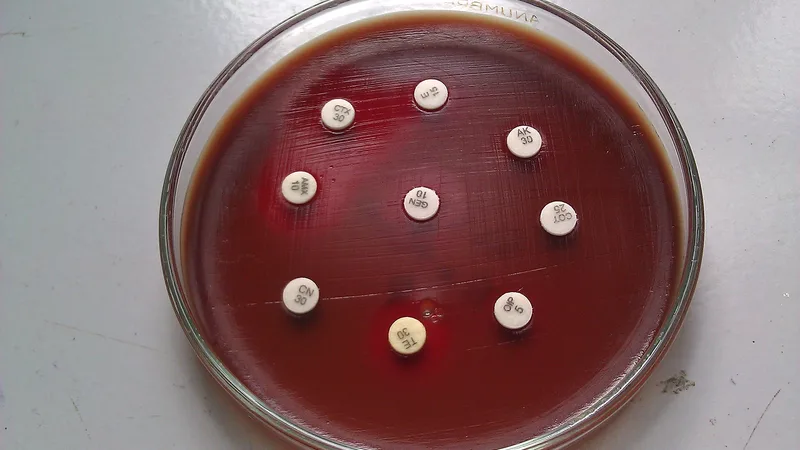
The endings mark the organism that produced the antibiotic, not how it works. Why gentamicin and erythromycin are spelled differently and share nothing else.
A laboratory definition, not a clinical one. What the MBC/MIC ratio means, why it shifts between labs, and what trials in severe infection actually found.

Codeine is a prodrug activated by CYP2D6, morphine is not. Poor and ultra-rapid metabolisers, and the exam trap.